


Privacy at a campsite isn’t necessarily something you think about. But when you arrive at a holiday park, and realise you’re shoulder to shoulder with strangers, you wish you had. Sharing every move, every meal and every piece of gear on display with your neighbour? Not ideal.
But campsite privacy is easy to fix. With a good setup and a few accessories, your exposed site can be revamped into something that feels more like your own space.
In Summary:
- Privacy isn’t just about setting up your space to be more comfortable. It’s also about making sure your equipment is protected and safe.
- Since every campsite is different, you’ll need to adapt your set-up depending on where you find yourself. It helps having the right gear that you can easily adjust and tweak when necessary.
- With our final checklist, you can plan for privacy. Get it right and every trip is more enjoyable from the start.
Why Privacy Matters at Campsites and Caravan Parks
Campsite privacy is less about comfort and more about control. At a busy caravan park or open campsite, a lack of privacy can mean:
- Your expensive gear is fully visible from every angle
- People are constantly walking past your space
- There’s nowhere to privately relax or switch off
- You’ve got less control over wind, sun, dust, and insects
Even in quieter destinations, campsite privacy still matters. You don’t go camping to feel like you’re sitting in someone else’s backyard.
Using Awning Walls to Create Privacy
Awning walls are the simplest and most effective way to block out your surroundings and to create a defined space around your caravan.
With awning walls, you’ll enjoy:
- Visual privacy from the neighbours, nearby walkways, and facilities
- Protection from the wind, sun, and rain
- A cleaner and more enclosed set-up
- Clear boundaries around your campsite
Side Walls for Blocking Neighbours
Consider side walls your first line of defence. They run along the side of your awning and block direct views from neighbouring campsites. If you’re parked close to other people, camping privacy screen walls will stop you staring straight into each other’s set-ups.
Front Walls for Full Coverage
Front walls close off the open side of your awning. They block the view into your space from anyone walking past, and work as a barrier against the wind, rain and direct sunlight. They’re a great option on their own and even better teamed with side walls.
Combining Your Walls for Maximum Privacy
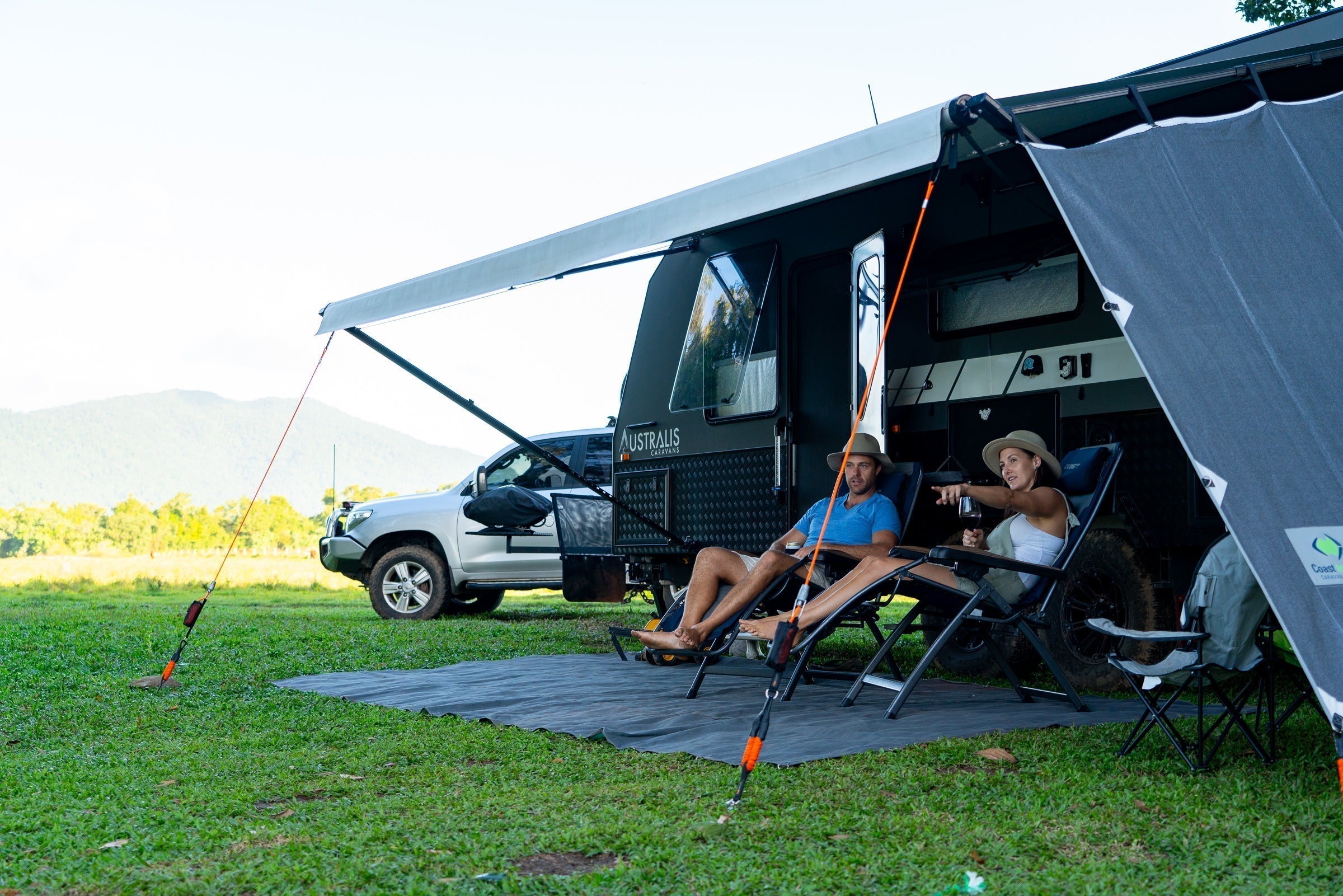
Attaching front and side camping privacy screens to your awning creates a complete annexed enclosure. This gives you a defined zone that blocks sightlines, cuts out the weather, and gives you an extended living space to relax in.
How to Secure Your Awning Walls Properly
Putting walls up is one thing. Securing them correctly is another. Loose privacy screen walls flapping, shifting, and leaving gaps defeat the whole purpose.
Using Screen Springs for Flexibility
Screen springs take the edge off any tension. Instead of your awning walls bearing the full brunt of the wind, screen springs absorb the load. They keep your caravan privacy screens tight and square, and your pegs from pulling out, while reducing the stress on your awning.
Choosing the Right Pegs
Your choice of peg is more important than you might think. If they don’t hold firm, your awning walls won’t either.
Use the best pegs for the ground you’re camping on. Hard-packed sites, sand, and soft soil all need different options. A weak peg set-up is usually the first thing to fail when the weather switches on you, so it’s a good idea to have all terrain covered in your kit.
Tensioning with Guy Ropes
Guy ropes keep everything stable and tensioned. They stop your awning walls from sagging, keep the panels straight, and help the whole awning set-up keep its shape.
They’re especially vital when you’re planning a longer stay, or if the weather is a bit rough.
Privacy Setup Ideas for Different Campsite Types
Every campsite and location is different. You should adapt your set-up depending on where you are. Simple tweaks and appropriate gear for the terrain can be the difference between constant adjustments to camp, and one you’ll relax into.
Beach Campsites
They’re open, windy, and exposed.
If you can, use both side and front caravan privacy screens. Use the soft-terrain pegs, angle guy ropes low, and focus on blocking out the wind as much as sightlines.
Bush Campsites
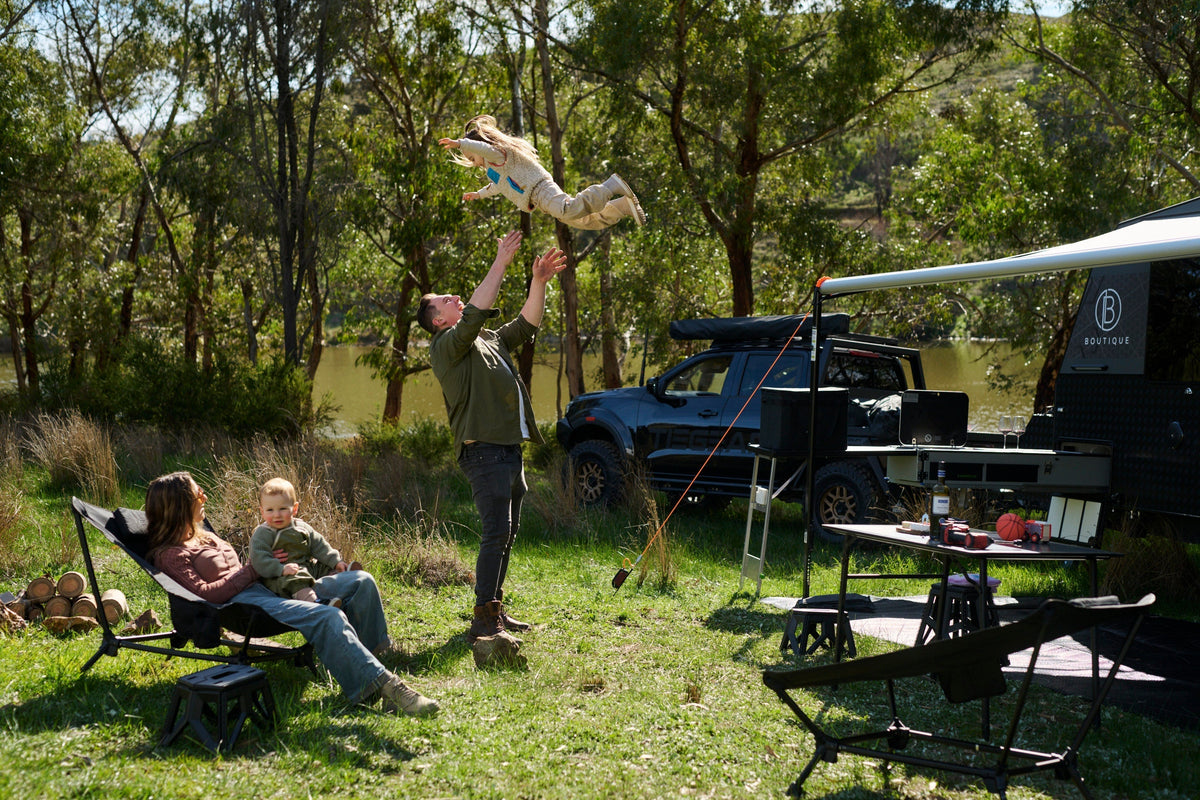
In the bush, you have more opportunities for natural cover, but less structure to work with. Use trees and terrain to your advantage, and fill the gaps with side walls where you need them. You won’t always need a full enclosure, but a partial setup still helps to define your space.
Holiday Parks
Tighter spacing, more foot traffic… this is where you’ll want the best caravan privacy screens. Use side walls to block neighbours and a front wall to stop people looking straight in as they walk past.
Long-Term Stays
If you’re set up for a while, go all in. Use front and side screen walls, screen springs, glow-ropes, and ground mats. The more time you’re spending at a single destination, the more worthwhile it is to create a space that feels comfortable and contained.
Common Privacy Mistakes to Avoid
Knowing how to keep your campsite private sets you up for a more enjoyable caravanning experience. But setting up safely while protecting your equipment is just as vital.
These common mistakes can unravel the plan:
- Only using one wall and expecting full coverage
- Leaving significant gaps between screen walls
- Not tensioning properly and dealing with flapping screens and tie-downs
- Using the wrong pegs for the surface you’re parked on
- Ignoring wind direction or wild weather forecasts when setting up
These are easy mistakes to make, but are even easier to avoid with a bit of foresight.
Final Privacy Setup Checklist
For campsite privacy, and a set-up that holds its own in the weather, run through this checklist:
- Side walls installed to block neighbouring sites
- Front wall added for full enclosure
- Walls sitting straight with no major gaps
- Screen springs in place to help handle the load
- Pegs matched to the terrain (soft vs hard)
- Guy ropes are tensioned properly
- Set up the position with wind direction in mind
- Ground mat down for a clean, defined space
Planning for privacy makes all the difference. Get the gear right, and every trip is easier and more enjoyable from the start.

Leave a comment
This site is protected by hCaptcha and the hCaptcha Privacy Policy and Terms of Service apply.