

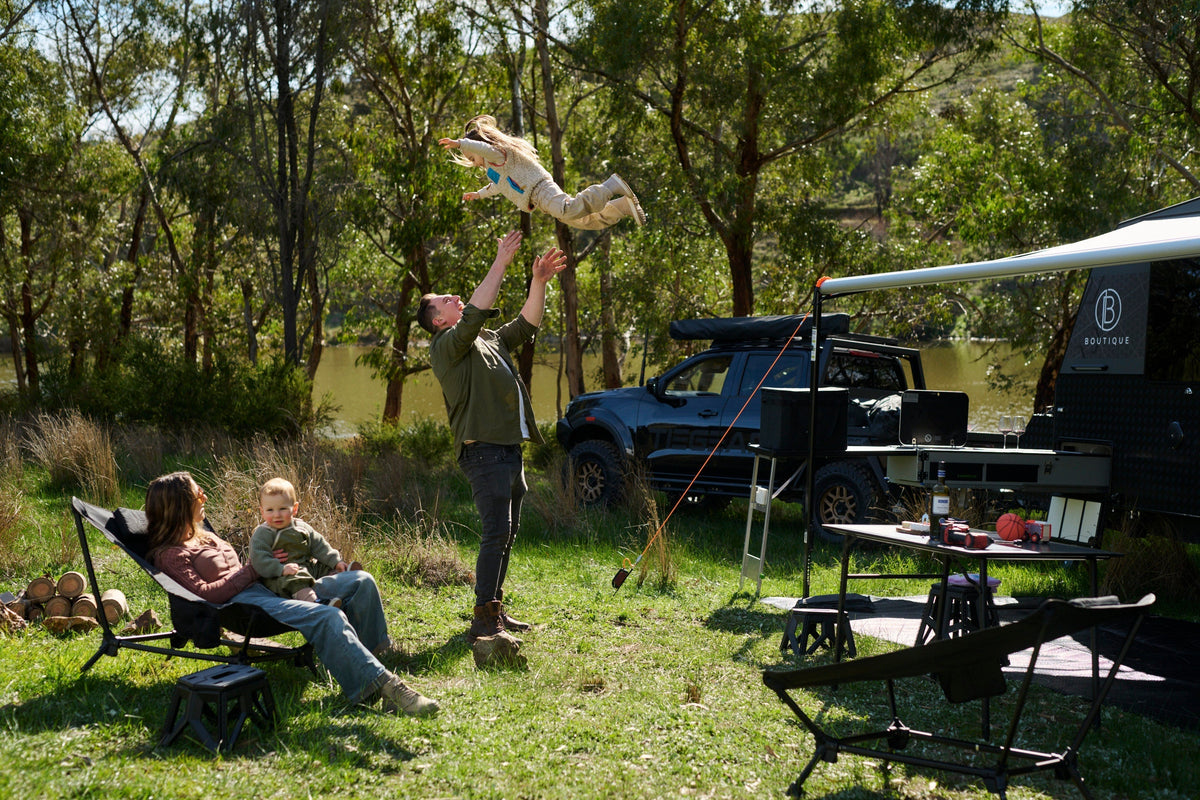
Camping for beginners can go one of two ways. Either you nail the basics and have a cracking first trip, or you spend half your time fixing stuff that could have been sorted before you left home.
At Tiegear, it’s no secret that we love the outdoors and we know it well. So, our team has compiled a practical list of camping tips for beginners that will get you set up safely and comfortably while avoiding the common rookie mistakes from happening on your first trip.
Tip 1: Start with the right gear (not all of it)
You don’t need a fully kitted setup for your very first excursion. Instead, just pack or borrow the tried and true essentials that won’t let you down.
Beginner campers should start with:
- A quality tent or swag (or, even better, a caravan)
- Sleeping gear selected for the expected weather conditions
- A simple cooking setup
- Lighting
- Reliable tie-down gear like guy ropes and pegs
The nice-to-haves can come later. The best camping gear for beginners is the equipment that keeps you dry, secure, comfortable, and fed.
If you’re unsure, run through a more comprehensive camping gear checklist before you go. It’ll save you from forgetting something obvious but entirely necessary when it’s too late to turn around.
Tip 2: Do a practice run at home
This is a step that even seasoned campers skip and regret. Run a shake-down at home, with all your gear, before you head out.
Set your tent up in the backyard, choose and use your pegs, run your guy ropes, check ratchet straps, and even cook a basic meal on your camp stove.
You’ll quickly figure out:
- What gear you are missing
- Which pieces work, and which don’t, in your set up
- If it’s all too heavy or bulky to travel with
- What takes longer than you thought
A shake-down is a low-pressure method to get familiar with your camp setup before you’re doing it in the dark with a torch in your mouth.
Tip 3: Pick an easy campsite first
Your first trip isn’t the time to head off-grid, into the great unknown, on your own.
Start somewhere simple:
- Holiday parks like Big4’s and Discovery Parks
- Designated campgrounds and bookable state spots
- Serviced sites with toilets and water (and sometimes, power)
You can ease into free camping later. For now, keep it straightforward. Camping for beginners is about learning the ropes without extreme conditions stacked against you.
Tip 4: Learn how to set up camp properly
Where you set up is a very important consideration. When you have arrived at your destination, look out for a site with:
- Flat, even ground
- Good drainage, well away from water sources
- Shelter from wind
- No direct overhanging branches or tree limbs
Of course, if you are prebooking a site at a campground or holiday park, take these camping tips for beginners into account before finalising your reservation.
Then take your time with setting it all up. Get your tent square, peg it out securely, and tension your guy ropes so nothing sags or flaps. A rushed setup is usually the reason things fall apart later.
Tip 5: Don’t skimp on pegs and tie-down gear
You can often get away with a compact or lower-cost tent, or with borrowing one. But cheap pegs will bend, and weak set ups do fail. So get the essentials right.
Different ground needs different gear, so make sure you’re prepared ahead of time:
- Hard ground needs strong, solid pegs. Opt for screw-ins
- Sand and soft soil need grip. Pack your soft-surface pegs
- Windy conditions need extra coverage. Take your tie-downs just in case
Tip 6: Keep meals simple
You’re not running a restaurant out there. Novice campers should stick to meals that are:
- Easy to prep
- Quick to cook
- Impossible to mess up
Think:
- One-pan meals, like pasta with a basic sauce
- Pre-marinated meats and packet rice
- Simple breakfasts like muesli and UHT milk
- Lightweight, energy-boosting snacks like dried nuts
Also, be sure to sort your food storage. Keep it all sealed, especially if you’re camping in areas with wildlife. Nothing ruins a trip quicker than animals and insects getting into your camp pantry.
Tip 7: Pack for the weather, not the forecast
In Australia, we know forecasts change fast. The weather apps rarely get it right 100% of the time. Don’t overdo the packing, but have enough with you in case the weather turns:
- Take lightweight layers, like merino base layers
- Pack rain protection, like a fold-up jacket
- Bring warm sleeping gear
Tip 8: Get your camp lighting sorted
Depending on where you are, once the sun drops, it can get very dark, very fast. In every good beginners guide to camping, lighting is a priority.
Bring:
- A head torch
- A lantern for your main area
- Backup batteries (that work!)
Don’t rely on your phone torch. You’ll drain the battery, and then you’ll have no light, communication, or entertainment to scroll.
Tip 9: Understand basic camping safety
Camping’s safe when you have a bit of awareness.
Keep in mind to:
- Store food correctly to avoid pests and bugs
- Be aware of your surroundings
- Let someone know where you are and how long you’ll be away
If you’re going solo, keep it even simpler. Stick to known campsites and holiday parks, and avoid pushing too far out on your first few trips.
Tip 10: Respect your campsite
Leave it how you found it. It’s that simple.
That means:
- Take all your rubbish home with you
- Don’t damage the area
- Keep noise at respectful levels
Do the right thing, and keep campsites open and accessible for everyone.
Tip 11: Don’t overpack, but don’t wing it either
There’s an art to this. Overpacking makes the haul in hard work, clutters your setup, and makes everything harder to find. Underpack, and you’ll be stuck wanting.
Stick to:
- The essentials first
- A few comfort items
- Back-up basics
If you’ve done your practice run and double-checked your gear list before hitting the road, you’ll land in the right spot.
Tip 12: Take your time packing down
At the end of every trip, you’ll feel tired, and you’ll just want to get moving. But this is where your gear can get lost or damaged.
- Take your time, slow it down
- Clean your gear before packing it up
- Let wet items dry where possible
- Pack things back where they belong, for example, in their right gear bag
Future you will be glad you did. There’s nothing worse than pulling out mouldy gear on the next trip.
Prepare For Your First Camping Trip with Tiegear
Camping for beginners doesn’t need to be complicated. Get the basics right, take a bit of time to learn your setup, and each trip will get easier.
If you’re building out your beginner's camping kit, start with the fundamentals. The gear you choose and rely on makes a world of difference. Opt for quality, appropriate pegs, reliable guy ropes and reinforced tie-downs for a setup you can trust time and time again. Once those basics are sorted, everything else becomes a whole lot more enjoyable, and that’s the goal.


Leave a comment
This site is protected by hCaptcha and the hCaptcha Privacy Policy and Terms of Service apply.