Screw-In Tent Pegs vs Traditional Pegs. Why Your Setup Needs an Upgrade
If you’ve ever wrestled a bent peg out of solid ground, or heard the flap of an awning fighting to break free at 2 am, you’ve probably asked yourself the question. Are screw-in tent pegs any good?
The short answer is yes. They’re very good, especially in Australian conditions.
So, how do they stack up in the screw-in tent pegs vs traditional tent pegs debate?
Well, traditional pegs still have a place. They’re cheap and familiar, and easy to leave rattling around in the bottom of a tent bag. But they also come with compromises. They don’t cut it in howling wind conditions, they’re hard work to pin into tough ground, and don’t hold well in soft or loose terrain. They also take a fair bit longer to work with when you’re setting up and packing down.
Screw-in pegs tackle those issues head-on, which is why more campers are starting to make the switch.
The Most Common Pain Points with Traditional Tent Pegs
Trusty, traditional tent pegs do the job. That is, until they don’t. Most setup frustrations come from the same handful of issues.
They struggle in windy conditions
Standard tent pegs rely on friction to hold firm. In strong winds, that grip can fail fast. Pegs loosen, ropes slacken, and you can find yourself chasing canvas across the campsite. Gale-force winds are no match for a traditional tent peg.
Hammering is exhausting
Driving pegs into hard ground takes time and effort, and it can do a number on your wrists and shoulders. There’s nothing worse than being unprepared for the terrain you’re camping on. And, packing it all up can be even worse, especially when pegs bend, jam or snap.
Different sets for different grounds
The reality is, there is no single peg that will suit every surface. A traditional tent peg isn’t going to work in soft soil, sand, clay or gravel. If you haven’t packed the right peg for your site, you’ll be camping on hope and a prayer.
They’re tripping hazards
Stubbed toes are almost a rite of passage for campers. Low-profile pegs and loose ropes are the perfect combination for an ankle-level hazard. We might survive, but it’s not ideal with kids, dogs, or your elderly parents around.
They’re tough to remove
When traditional tent pegs go in at the wrong angle or hit rock, getting them out can be a proper battle. Levering pegs free often bends them beyond use, snaps them completely, or destroys your knuckles.
Why Experienced Campers Are Switching to Screw-In Pegs
Screw-in pegs aren’t a gimmick. Although a relatively modern solution for campers, the concept has been used by climbers for centuries. They’ve been proven as a practical upgrade, saving time and effort, and tents and awnings, especially for those who camp often.
Unmatched holding power in high winds
Screw-in tent pegs weave into the ground. Instead of relying on surface grip, their spiral design locks deep into soil and sand. That hold makes a big difference for securing awnings, swags, and gazebos when the weather is rough.
Effortless installation (The end of the mallet!)
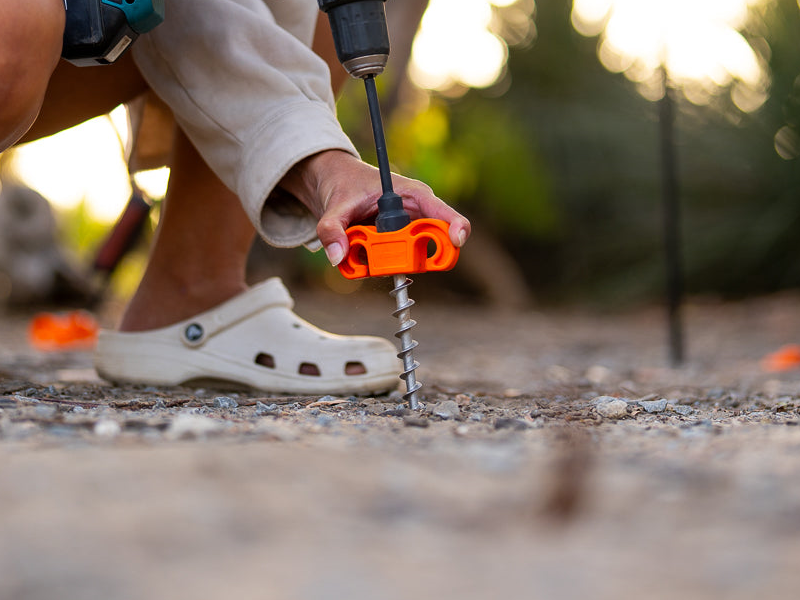
Screw-in pegs install with a cordless drill or a hand driver. You can forget calluses and sore elbows from swinging a hammer, and the added load weight of carrying a heavy mallet. Setting up and packing down with a drill and screw-in peg set is quicker, quieter, and gentler on the body.
Versatility across all terrain types
Hard ground, loose sand, mushy grass, or mixed terrain. Screw-in pegs adapt better across varying conditions. That means fewer peg sets to carry in your kit, and the right pegs on hand for every job, when you need them.
Comparing Screw-In vs Traditional. A Side-by-Side Breakdown
Just like all innovations, screw-in tent pegs are a next-generation solution that does a better all-around job at camp. They’re easier to install, tend to sit flush in the ground, and hold tension evenly. Traditional pegs rely more on angle and soil type to stay put.
|
Feature |
Screw-in Tent Pegs |
Traditional Tent Pegs |
|
Holding Power |
High. Locks firm into the ground |
Moderate. Relies on surface grip |
|
Wind Resistance |
Excellent |
Variable, depending on terrain |
|
Installation |
Drill, or hand driver |
Mallet, or bare hands |
|
Removal |
Simple, reverse drive out |
Can be difficult with bare hands or a hammer |
|
Terrain range |
Wide |
Limited |
|
Safety |
Low trip hazard |
Higher trip risk |
|
Set-up time |
Fast |
Can be slower |
Best Use Cases for Screw-In Pegs
Screw-in pegs really earn their keep in a few key scenarios:
1. Hard-packed and rocky ground
Driving standard pegs into compacted ground can lead to bent steel and curse words. Screw-in pegs, on the other hand, cut their own path deep into the ground. They’re far more reliable in tough or rocky campsites than your traditional option.
2. Sand and soft soil
The long-thread design of screw-in pegs allows for more surface contact, keeping the pegs anchored in loose sand and soft soil environments. That’s a win for beach camps, 4WD trips, and coastal set-ups.
3. Securing awnings and large gazebos
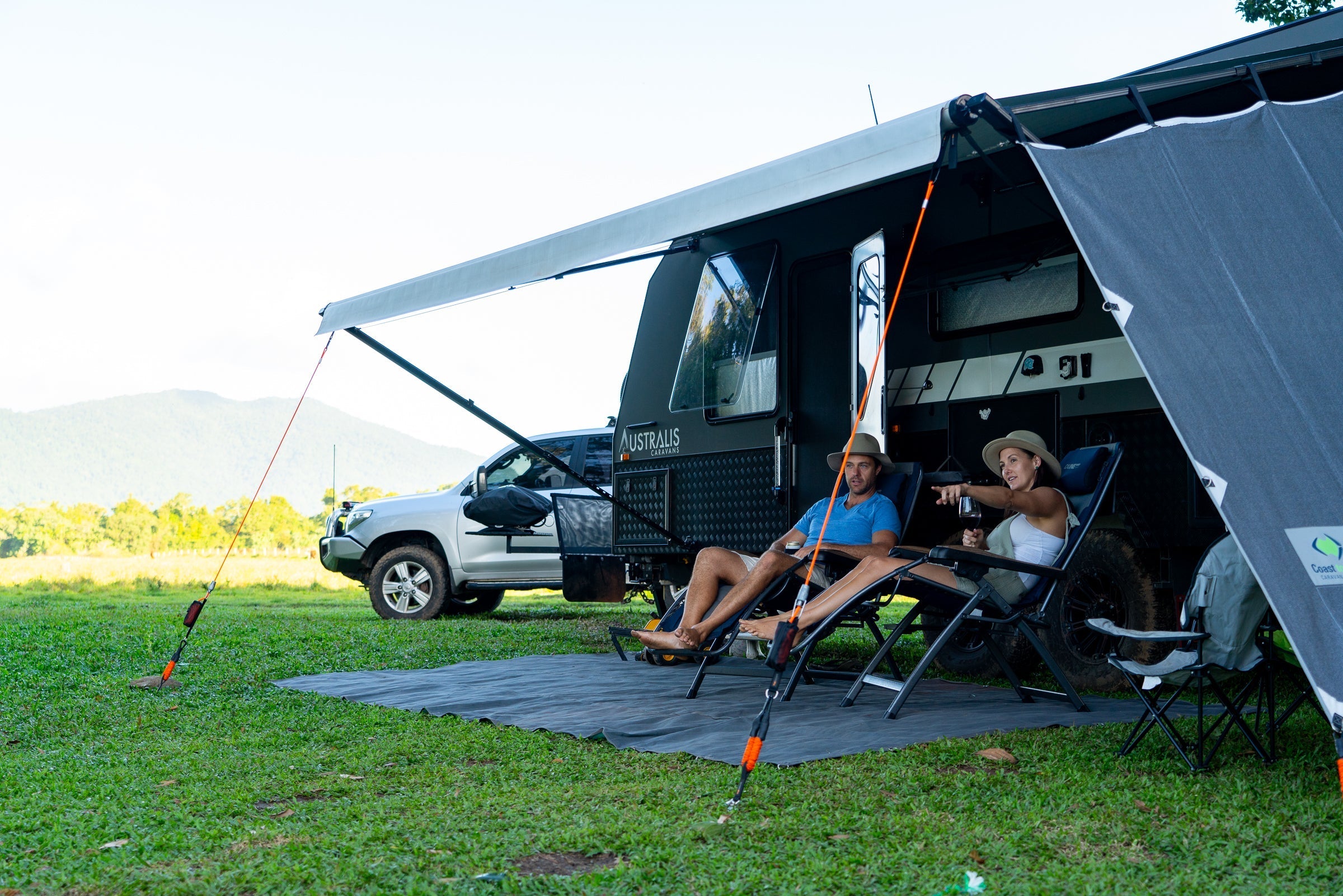
Awnings are like sails in the wind, and if you’re caught up in a gale, you could find yourself in real trouble. Where traditional pegs pull and shift in a lashing, screw-in pegs hold tension. They grip firmly, anchoring your awning or gazebo, reducing movement and protecting the fabric and fittings.
Should You Make the Switch to Screw-In Pegs?
If you’re a frequent camper, caravanner or hiker, or use awnings and gazebos at home or at the beach, switching to screw-in pegs makes a lot of sense.
Screw in pegs:
- Save time
- Reduce effort
- Hold stronger across more terrain types
They’re especially worthwhile for:
- 4WD touring and off-road adventures
- Coastal and beachfront camping or day-trips
- Family or large group setups with awnings
- Caravans with privacy screens
- Longer stays where you want it done once, and done right
Make Camping Easy with Tiegear’s Terra Tent Pegs
You don’t need to ditch traditional pegs entirely. If you’re upgrading your main setup, build from there.
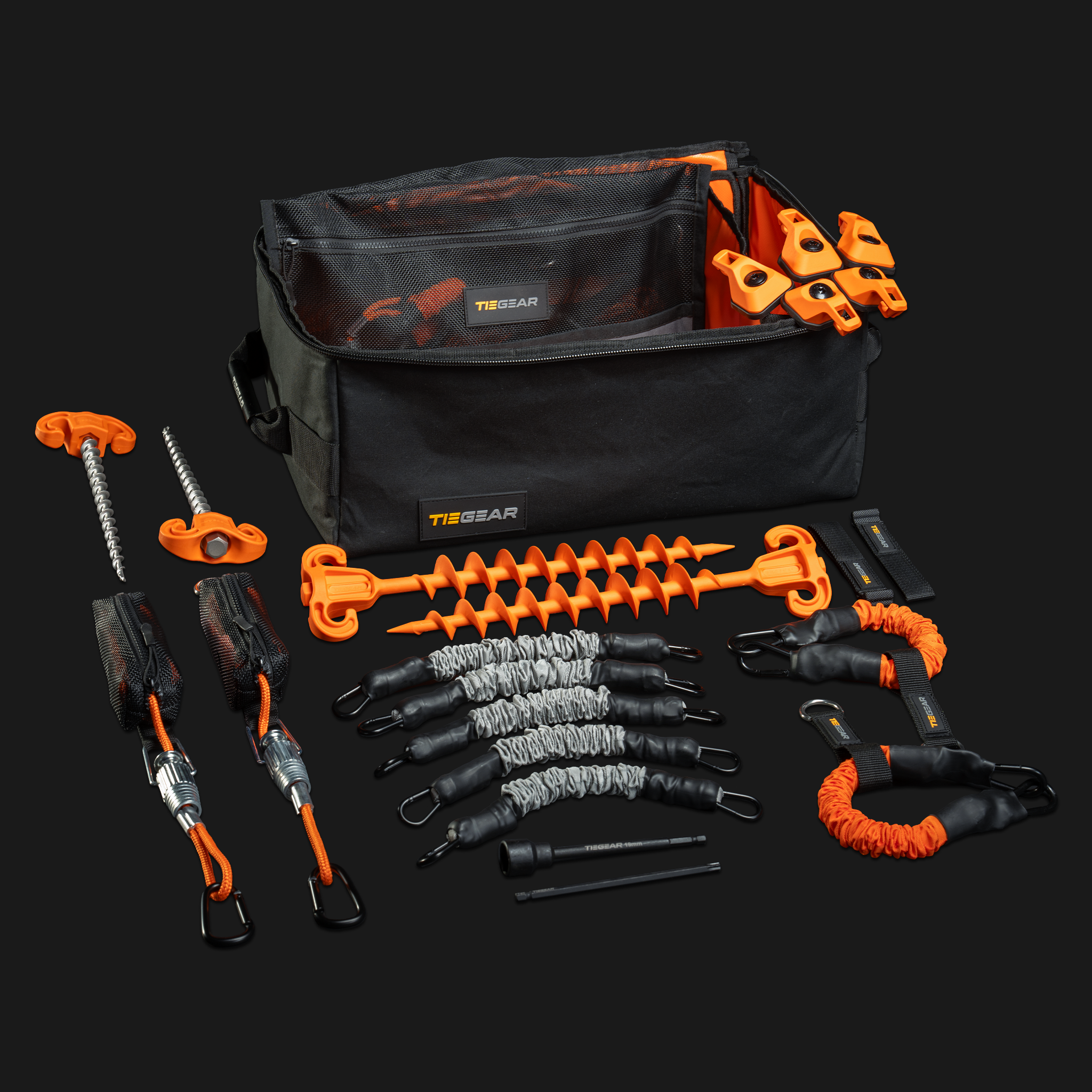
Tiegear’s Terra tent pegs are designed for real Australian conditions. They’re constructed tough, designed to drive into the terrain, and anchor you there. They’re made to last, withstanding the sun, the cold, and repeated use across all of your trips.
If you’re ready to take the hassle out of pegging down your camp, find your new kit in the Tiegear Screw-in pegs range.