If you’ve ever peered up at your roof rack mid-drive and felt that flicker of doubt, you’re not alone. Loose straps, shifting loads, and gear humming in the wind are all signs that something wasn’t tied down properly.
Roof racks are brilliant when they’re used right. They free up space inside your vehicle and let you carry bulky gear safely. But they also sit in the firing line for wind, vibration, and sudden braking. If your load isn’t secured properly, it will move. Eventually.
Knowing how to tie down on roof racks, the right way, makes all the difference.
Choose the Right Tie Down Straps
Before you start strapping anything down, make sure you’re using the right gear. Not all roof rack tie downs are created equal. The strap you choose depends on what you’re carrying and how much movement you need to control.
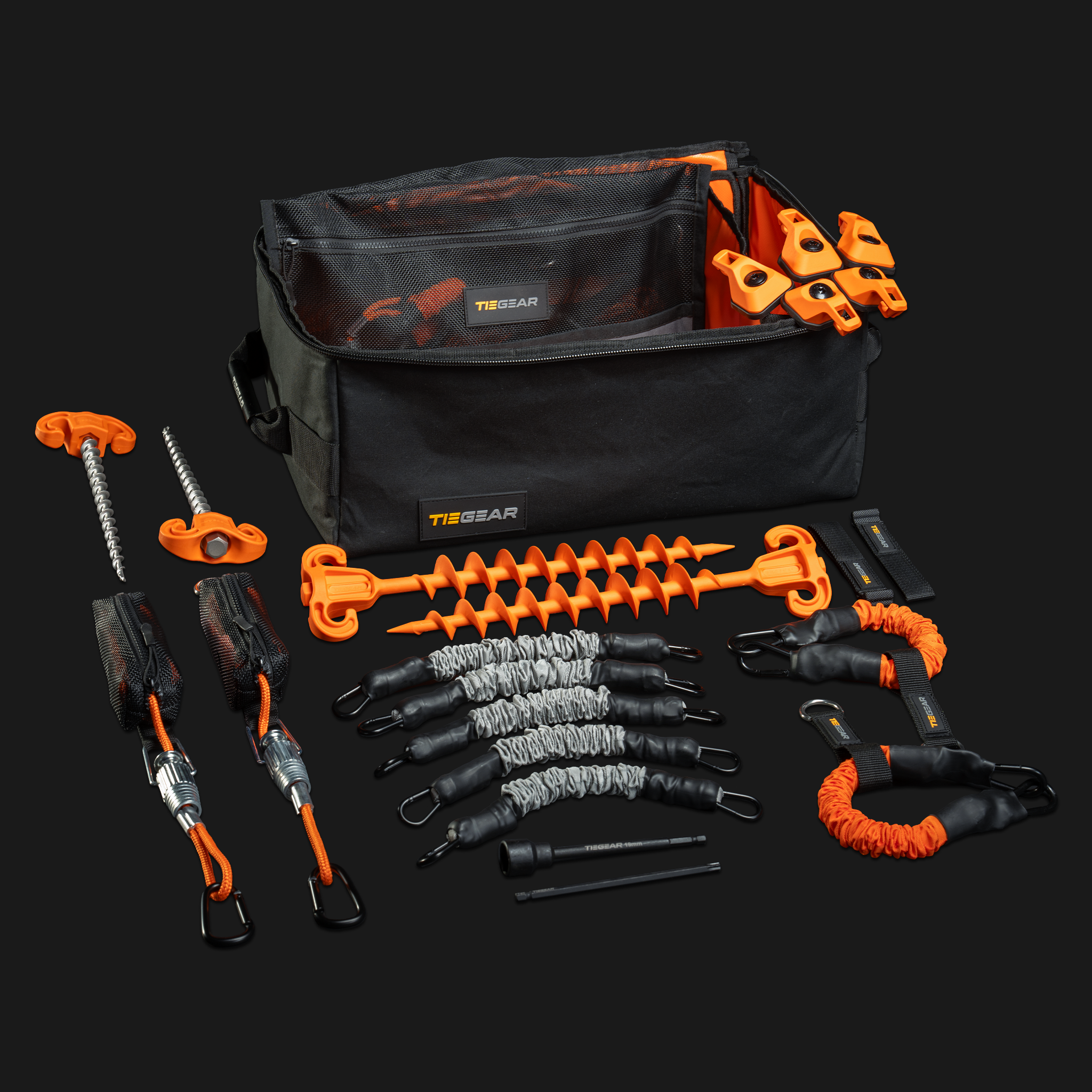
For heavier loads like swags, storage boxes, or timber, ratchet straps are the go-to. They give you controlled tension and lock it in place. Tiegear ratchet straps are designed for repeat use and long hauls, with weather-resistant hooks, reinforced webbing and reliable ratching systems.
For lighter gear like surfboards or kayaks, cam buckle straps work well as your go-to roof rack tie downs. They’re fast, simple, and reduce the risk of crushing delicate loads underneath. The Nexa Max cam buckle strap feeds easily around bulky water gear and locks it down fast.
Whatever you choose, check the rating. Always go stronger than you think you need.
Step-by-Step: How to Tie Down Loads on Roof Racks
The process is the same for most loads, whether you’re tying down a surfboard or loading up kayaks to your roof rack. Get this part right, and you’ll avoid 90 per cent of common issues.
- Position the load properly - Centre the weight of your load across the roof rack. Keep it low and even, and avoid any overhang where possible.
- Attach straps to solid anchor points - Hook or loop your tie-down straps around the roof rack bars, not the plastic trims or accessories.
- Run straps over the load - Keep the webbing flat - make sure there aren’t any twists in the roof rack straps. This spreads the tension evenly and stops wear.
- Tighten gradually - Ratchet or pull the strap until the load doesn’t move, and there’s no slack. Firm is good, cranked to death is not.
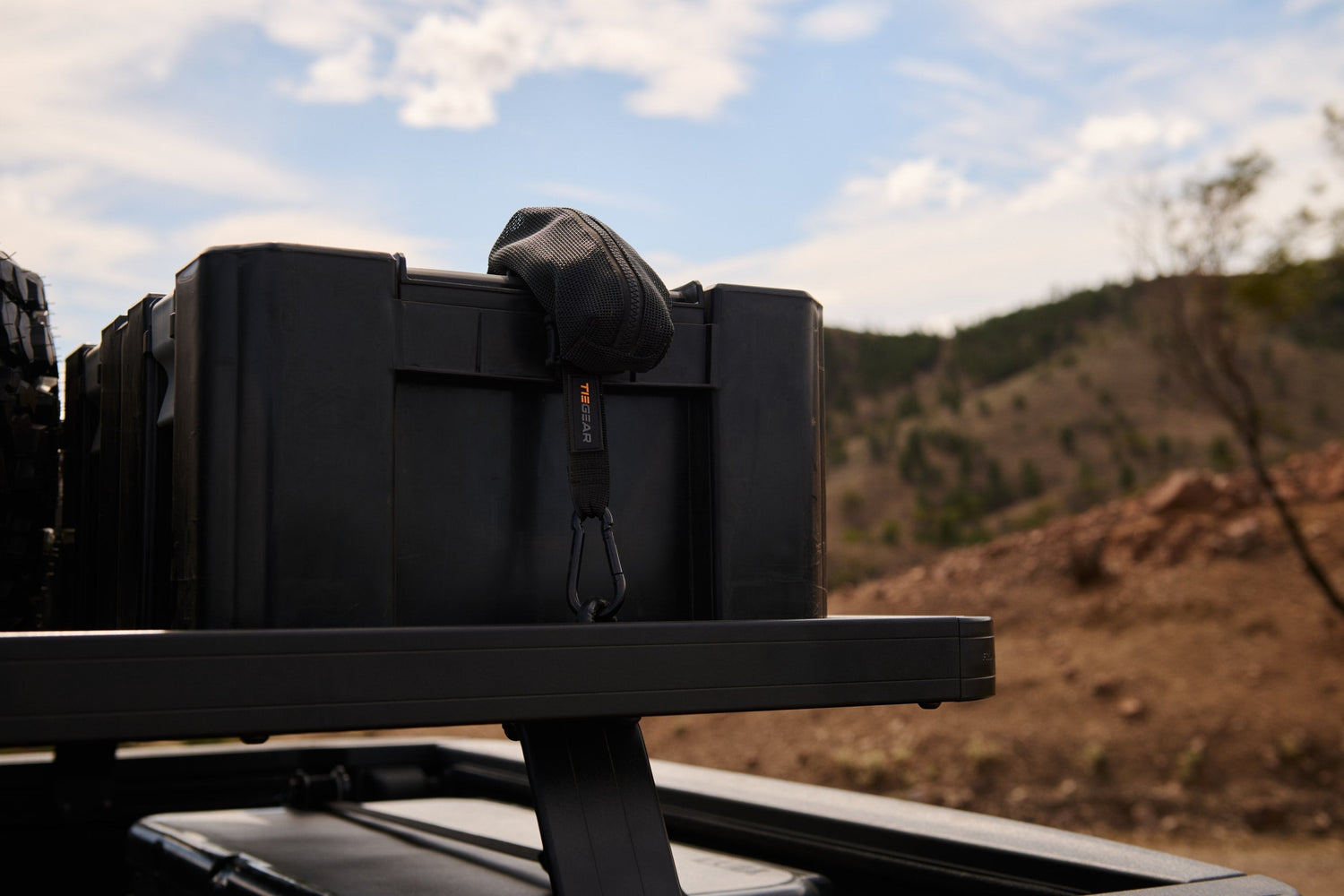
- Lock and tidy - Lock the ratchets fully and secure any excess webbing so it doesn’t flap around. If you’re using Tiegear Nero roof rack straps, loop and stow the unused webbing into the net bag.
-
Give the load a shove - If it shifts, tighten it again.
Common Roof Rack Tie-Down Mistakes and How to Avoid Them
Most roof rack issues come from small oversights. Thankfully, they’re usually easy to fix, and even easier to avoid.
Mistake 1: Using the wrong strap
Traditional bungees stretch and run-of-the-mill ropes loosen. Use proper roof rack tie downs, like Tiegear ratchet straps or cam buckle straps, purpose-designed for load control.
Mistake 2: Over-tightening
More force isn’t always better. Too much tension can crush your gear or strain your roof racks.
Mistake 3: Twisted webbing
Twists weaken the straps and create noise. Always lay your roof rack straps flat before tightening.
Mistake 4: Poor anchor points
If the point bends or flexes, it’s not secure. Strap to the rack itself.
Mistake 5: Skipping re-checks
Heat, wind, and vibration from driving over uneven surfaces will loosen straps over time. Check them after the first 10 to 15 minutes.
Avoid these everyday errors, and you’re already ahead of most people on the road.
How to Tie a Swag or Tent to Roof Racks
Swags are heavy and awkward, and they love to catch wind. When you’re tying your swag to your roof racks, they need a solid setup.
- Lay the swag or tent lengthwise across the roof racks
- Use two roof rack tie-down straps, one at each rack bar
- Run the straps over the swag or tent and under the roof rack bars
- Tighten evenly on both sides
- Add a third strap if the swag is long, soft, or particularly flimsy
Make sure the swag can’t slide forward or backward when you’re braking. That’s where most movement happens.
How to Tie Down a Kayak to a Roof Rack
Kayaks are light, and that means they can also be victim to the wind. Balance is important here.
- Place the kayak hull-down, ideally on padded roof rack bars
- Use cam buckle straps over the kayak at each roof rack bar
- Tighten until the load is snug (not crushed)
- Add bow and stern lines (secondary attachments at the front and rear of your vehicle) for longer trips
- Secure any loose webbing (use the net bag if you’ve hooked up a Tiegear Flexstrap)
-
Check your height clearance before driving - kayaks sit higher than you think.
How to Tie Down a Surfboard to Roof Racks
Surfboards need a gentle touch, and a nice, clean setup. Avoid ratchet straps for this job as too much tension can damage your board. Opt instead for a good-quality cam buckle strap.
- Place the board deck-down onto padded roof racks
- Loop the cam buckle strap over the surfboard and under the roof rack bars
- Tighten evenly, just enough to stop any movement
- Twist the strap once between board and the buckle to reduce any wind noise
- Tuck unused webbing away securely
Quick Safety Checklist Before You Drive
Before you take off, run through your last-minute checks. Make this a habit you follow every time.
Check that your:
- Load is centred and stable
- Roof rack tie downs are flat and evenly tensioned
- Ratchets are fully locked
- Excess webbing is secured
- Nothing can slide forward or sideways
- Roof load is within vehicle limits
Stop after the first short stretch on the road, and check again. It’s time well spent.